How Do Ceramic Grill Tiles Work to Improve Gas Grill Performance
September 1, 2026
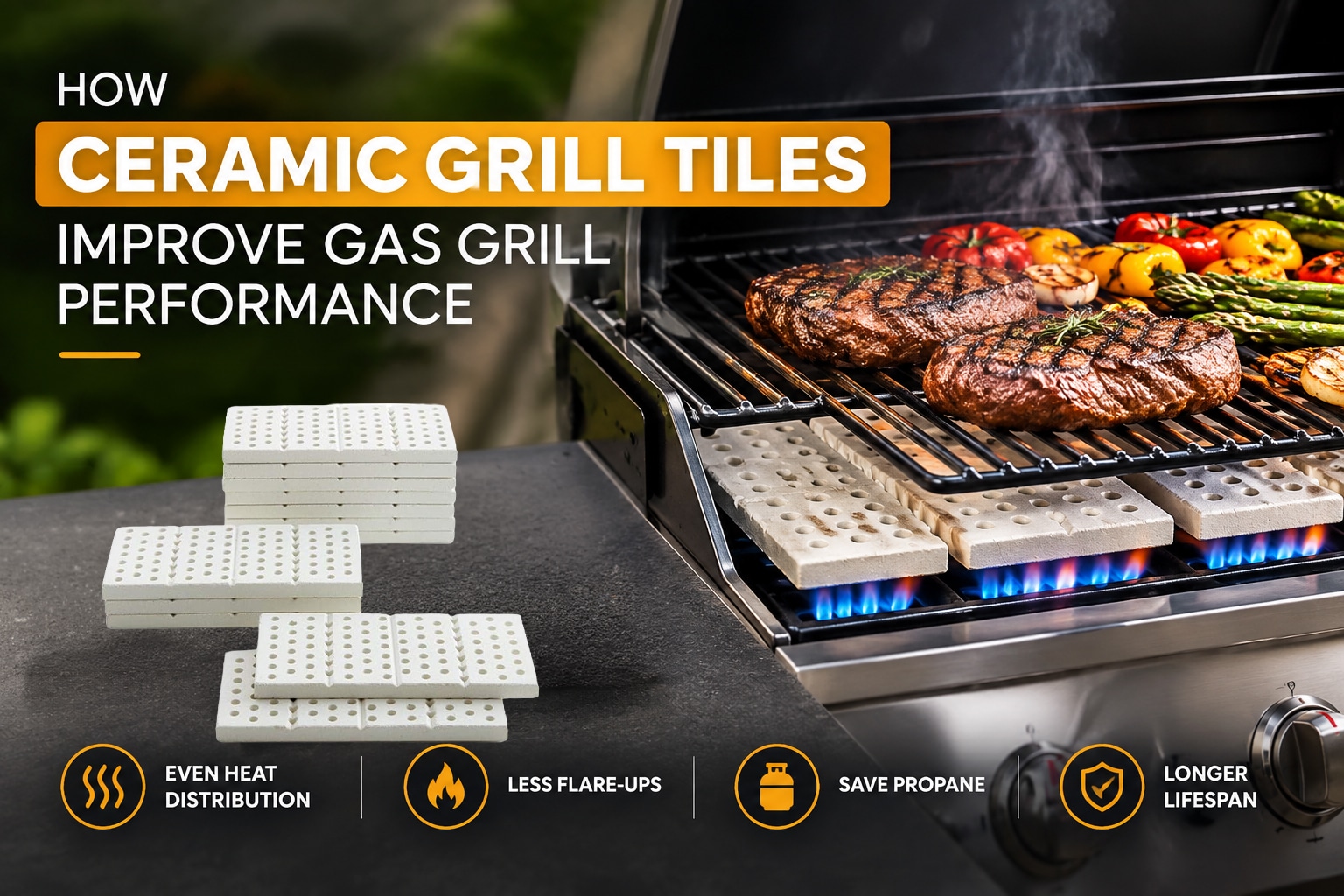
If you have been wondering how ceramic grill tiles work to improve gas grill performance, the answer comes down to how heat moves from your burners to your food and how much of that energy your current setup is actually putting to use. Most gas grills rely on direct flame or basic grates to transfer heat, which produces inconsistent results, higher fuel consumption, and constant flare-up management. Ceramic tiles for gas grills interrupt that process in a specific way, converting open flame into stable radiant heat that covers the cooking surface evenly, cooks food more consistently, and gives you more control over every session without adding complexity to the setup.
Quick Answer
Ceramic grill tiles sit above your gas burners and absorb heat from the flame before radiating it back upward as steady, even infrared heat. This eliminates hot spots, reduces flare-ups from grease drips, cuts down on propane consumption, and produces more consistent cooking results across the entire grill surface. They replace the need for lava rocks or flavorizer bars and outlast both by several seasons.
How Ceramic Grill Tiles Convert Flame into Even Radiant Heat
What Happens Without Them
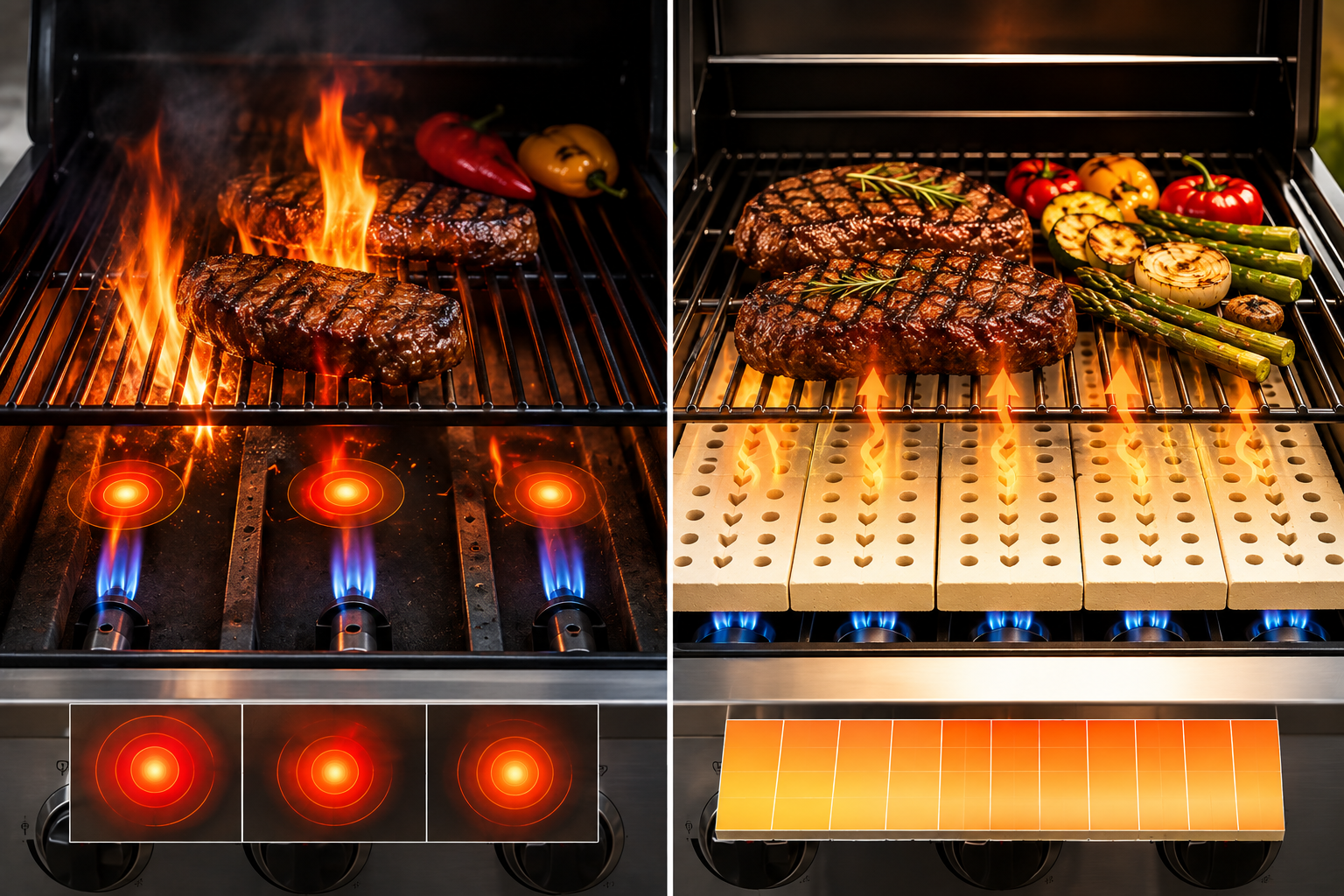
A standard gas grill without heat media pushes flame directly up through the grates toward the food. The result is concentrated heat directly above each burner, cooler zones in between, and grease dripping straight onto the flame, which produces flare-ups that char food unevenly and require constant attention. The burners also have to run harder to maintain cooking temperature because heat escapes through the sides and lid rather than being retained and redistributed.
For the occasional griller, this is manageable. For anyone cooking regularly or for a crowd, the inconsistency becomes a genuine problem across every session.
What the Tiles Do
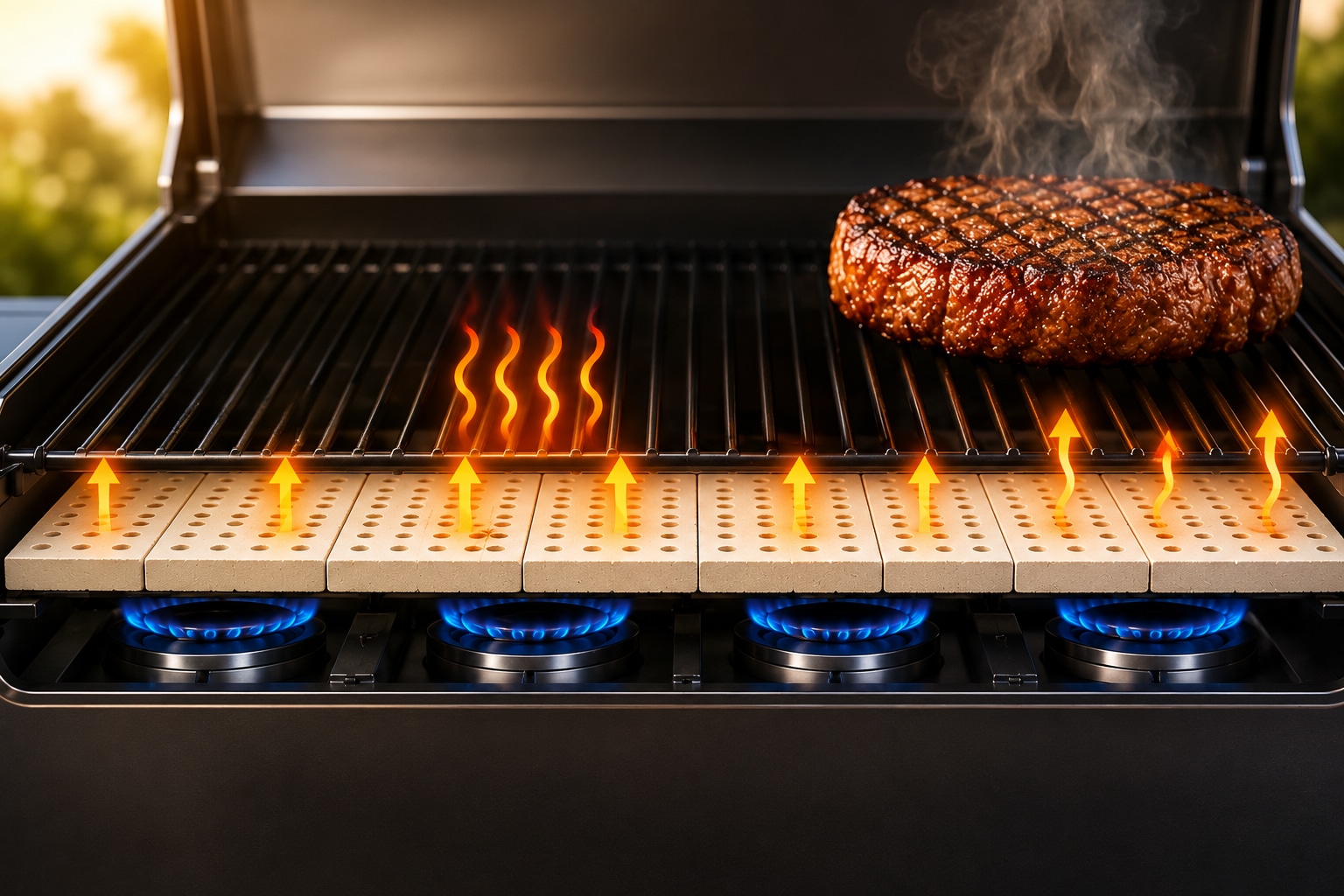
Ceramic grill tiles absorb the thermal energy produced by the gas burners below them and re-emit that energy as radiant infrared heat across the full tile surface. Because ceramic is a dense, thermally stable material, it holds heat evenly across its surface rather than concentrating it in peaks directly above each burner jet. The tile surface stays at a consistent temperature, which means the cooking zone above it receives uniform heat regardless of where food is positioned on the grate.
When grease drips from the food during cooking, it lands on the hot ceramic surface and vaporizes almost immediately rather than pooling and igniting on the burner. This is the mechanism that keeps flare-ups controlled without requiring the griller to intervene.
The Performance Improvements Ceramic Tiles Deliver
Even Heat Distribution Across the Cooking Surface
Hot spots and cold zones are the most common complaint among gas grill users, and they are a direct result of cooking over open flame without adequate heat media between the burners and the grates. Ceramic tiles for gas grills eliminate this by spreading thermal energy laterally across the tile surface before it reaches the food. Even heat distribution means a rack of ribs, a tray of vegetables, and a set of burgers can all cook at the same rate without rotating or repositioning throughout the cook.
Reduced Propane Consumption
Because ceramic tiles retain and radiate heat efficiently, the burners do not need to run at the same output level to maintain cooking temperature across a long cook. The tile surface holds heat between burner cycles, reducing fuel consumption noticeably, and grillers who make the switch to ceramic tiles for gas grills consistently find that the ability to save propane with grill tiles is one of the most practical benefits of the upgrade.
Flare-Up Control Without Compromising Flavor
Grease management is where ceramic tiles earn their place in any serious grill setup. Lava rocks absorb grease until the saturated surface ignites, and bare burners send drips straight into open flame. Ceramic tiles vaporize drippings on contact, producing clean smoke that rises back toward the food and contributes to flavor without the uncontrolled flare-up. The cooking environment stays predictable, and the smoke flavor remains consistent throughout
Longer Lifespan Than Lava Rocks or Flavorizer Bars
Lava rocks degrade from grease saturation and thermal cracking, typically requiring replacement every one to two seasons. Steel flavorizer bars corrode and warp under sustained high heat. Ceramic grill tiles are resistant to both, holding their structure through repeated heat cycles without absorbing the grease or rusting at the contact points. A quality set lasts three to five years with minimal maintenance, making them a gas grill upgrade that pays back its cost within the first two seasons for regular grillers.
Installing Ceramic Grill Tiles in a Gas Grill
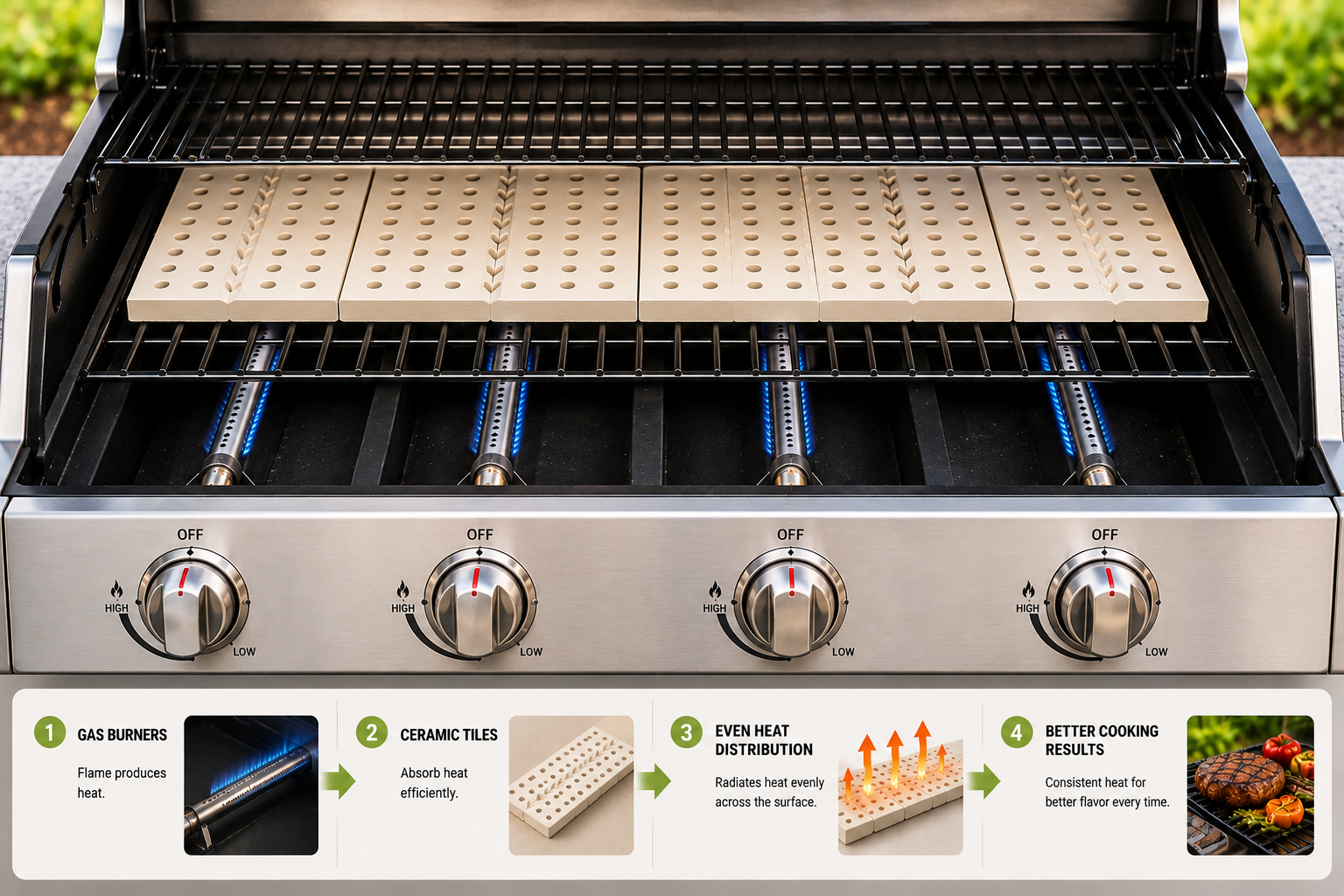
Ceramic tiles for gas grills are designed to sit directly above the burners in the space between the burners and the cooking grates. Installation does not require tools or modification to the grill in most cases. The tiles are placed side by side to cover the burner area completely, ensuring no gaps that would allow direct flame through. Most sets are sized to fit standard gas grill configurations, and the BBQ King Ceramic Grill Tiles include sizing guidance for fitment across common grill models.
Once installed, the tiles require a brief initial heat-up cycle at medium heat before first use to allow the ceramic to reach its operating temperature evenly. After that, they are ready to use with no further adjustment needed.
Why the BBQ King Ceramic Grill Tiles Are Built for This
The BBQ King Ceramic Grill Tiles are manufactured from dense, high-temperature ceramic that retains heat evenly across its full surface without the hot spots common in lower-density alternatives. The material resists thermal shock, handling the temperature swings of a high-heat sear followed by a low-and-slow finish without cracking or degrading. For anyone committing to a gas grill upgrade that eliminates recurring replacement costs and delivers consistent results, these tiles are the practical choice.
Frequently Asked Questions
Do ceramic grill tiles work with all gas grills?
Most ceramic tiles for gas grills are sized to fit standard two and three-burner gas grill configurations, though checking your grill dimensions against the tile specifications before purchasing is worthwhile. Complete coverage of the burner area without gaps is what enables even heat distribution across the cooking surface.
How long do ceramic grill tiles last?
With basic maintenance, ceramic grill tiles hold up three to five seasons before performance begins to decline, which is considerably longer than lava rocks at one to two seasons or steel flavorizer bars that corrode under sustained heat. The dense ceramic material resists grease absorption and thermal cracking, which is what gives them that durability advantage.
Can ceramic grill tiles actually help save propane?
Yes, because ceramic tiles retain and radiate heat efficiently, the burners do not need to run at full output to maintain cooking temperature, which reduces propane consumption per session. Grillers who switch to ceramic tiles for gas grills from lava rocks or bare burners consistently report lower fuel use across cooks of the same duration.
Do ceramic grill tiles need to be cleaned after each use?
Ceramic grill tiles do not need cleaning after every cook since surface residue burns off during the heat-up phase of the next session. For a more thorough refresh, flipping the tiles and running the grill on high heat for 15 minutes clears accumulated residue without any scrubbing or removal required.
Will ceramic grill tiles affect the flavor of grilled food?
Ceramic grill tiles improve flavor consistency rather than altering it, because grease drips vaporize on the tile surface and send clean smoke back toward the food rather than burning off in open flame or sitting in a saturated rock. The result is a steadier smoke contribution throughout the cook with none of the acrid notes that come from rancid grease buildup.