How to Stop Gas Grill Flare Ups and Cook More Safely
September 16, 2026
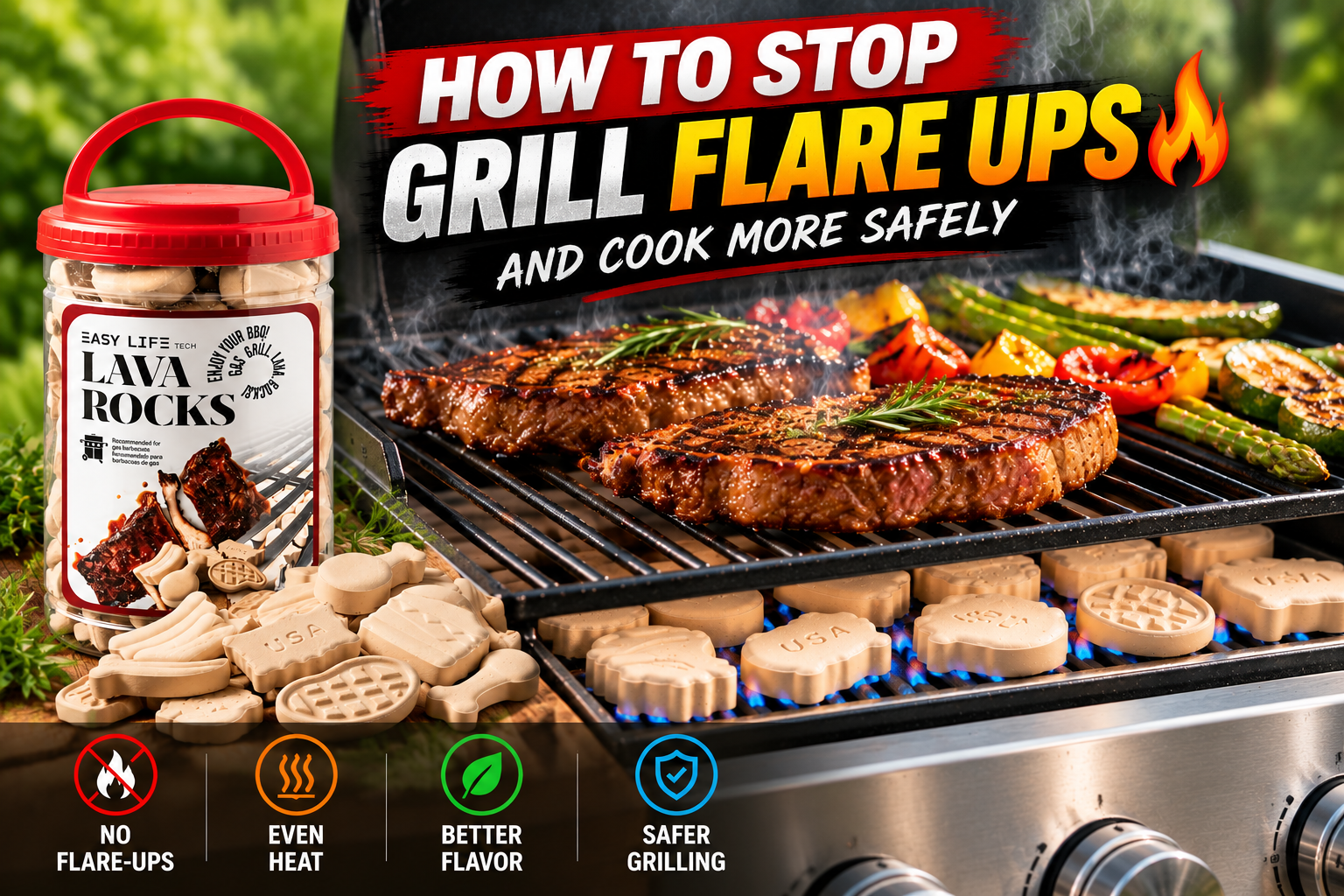
If you have been searching for how to stop grill flare ups and keep your cookouts from turning into fire management sessions, the problem almost always starts with how grease is handled inside the grill rather than with the heat setting or the food itself. A flare-up occurs when fat drips from the food onto a heat source that cannot dissipate it quickly, igniting and sending flames up through the grates with enough intensity to char the exterior of the food before the interior has finished cooking. Understanding what drives this cycle is the first step toward preventing it, and the fix is more durable than most grillers expect once the right setup is in place.
Quick Answer
Grill flare ups are caused by grease dripping onto an open flame or a heat media that absorbs and holds fat until it ignites. To prevent grill flare ups consistently, manage grease before and during the cook, keep heat media clean, and switch to ceramic briquettes for flare ups, which vaporize drippings on contact rather than absorbing them. Combined with a few practical gas grill safety tips around preheat and fat trimming, flare-ups become rare rather than routine.
Why Grill Flare Ups Happen in Gas Grills
The Role of Grease
Every flare-up on a gas grill traces back to fat meeting an open or poorly managed flame. As meat heats up, fat renders and drips through the cooking grates toward the burners or heat media below, and with no effective barrier in place, that fat ignites almost immediately and sends fire up through the grates. Fatty cuts like chicken thighs, pork ribs, and marbled steaks are the most frequent triggers, though even leaner proteins produce enough drip to cause problems at high heat.
The Problem with Lava Rocks and Bare Burners
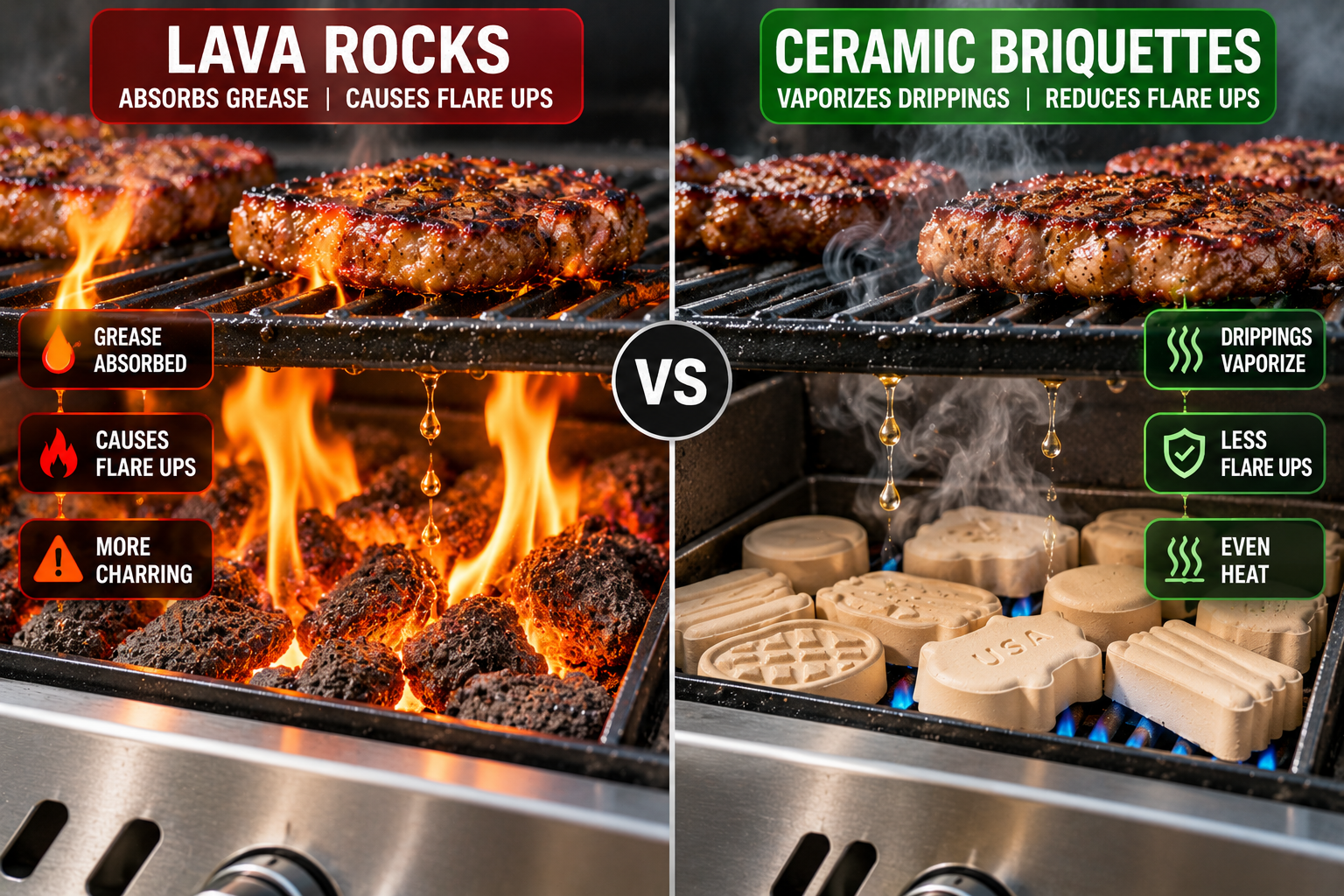
Lava rocks were the standard gas grill heat media for decades, and they produce flare-ups for a specific reason. Their porous surface absorbs grease with every cook, and once saturated, they hold that fat at high temperature until it ignites. Bare burners are no better, as drippings reach open flame without any intermediary at all. Both setups make learning how to stop grill flare ups harder than it needs to be, because the equipment is working against the griller rather than with them.
How to Stop Grill Flare Ups Before They Start
Trim Excess Fat Before the Cook
Removing visible fat from meat before it goes on the grill is the single most direct way to reduce the volume of drippings during a cook. Trimming does not mean removing all fat, which would strip flavor and moisture, but reducing large deposits on chicken skin, pork shoulder, and ribeye to a consistent thickness gives the remaining fat somewhere to render slowly rather than pooling and dropping in quantity. This one BBQ tip costs nothing and cuts flare-up frequency significantly before any equipment change is made.
Preheat and Clean the Grates Properly
Residue from previous cooks left on the grates breaks down under heat and contributes to early-session flare-ups before any new drippings have had a chance to accumulate. Preheating the grill on high for 10 to 15 minutes burns off that residue, and brushing the grates clean immediately after gives the next cook a cleaner starting surface. Among gas grill safety tips that require no additional equipment, this one is often overlooked despite being directly responsible for the flare-ups that happen in the first few minutes of cooking.
Manage the Heat Zones During the Cook
Keeping one section of the grill at lower heat gives the griller a destination for food that is producing heavy drippings rather than letting it sit over full flame. Moving a fatty cut to a cooler zone when it starts to flare, then returning it once the surface has stabilized, is a practical mid-cook adjustment that does not require any special equipment. Paired with a clean grill and trimmed meat, it covers the majority of flare-up situations most grillers encounter regularly.
Switch to Ceramic Briquettes for Flare Ups
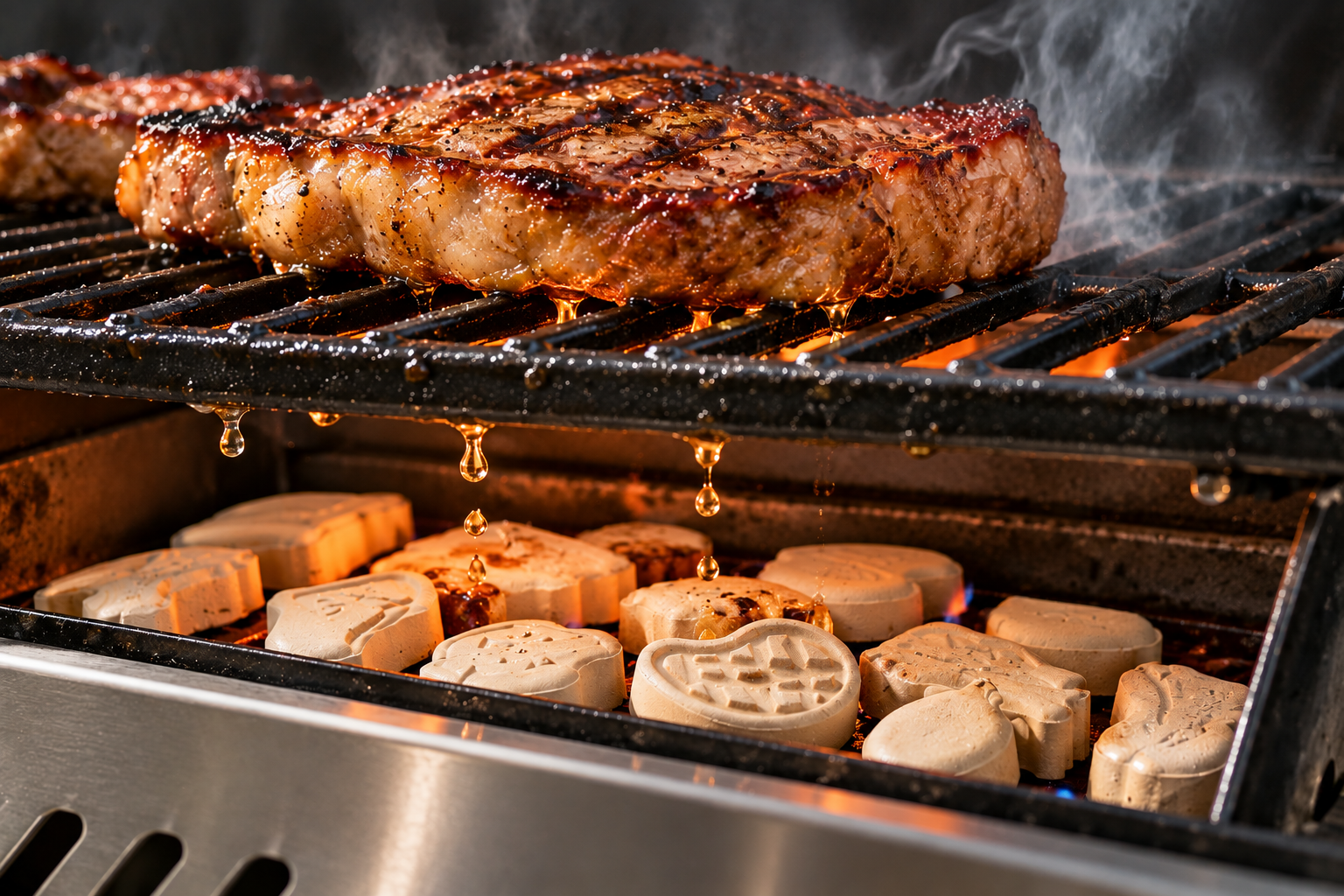
The most durable fix for persistent grill flare ups is replacing the heat media. Ceramic briquettes for flare ups work because their dense, non-porous surface does not absorb grease at all. When fat drips from the food and lands on the tile surface, the heat vaporizes it almost immediately, producing smoke that rises back toward the food rather than pooling into a fuel source that ignites. Grillers who make this switch find that flare-ups go from a regular management task to an occasional minor event, without any change to cooking technique or heat settings.
Gas Grill Safety Tips When a Flare Up Happens Anyway
Even with the right setup, an occasional flare-up is possible. Dousing a grill fire with water is one of the more common mistakes in backyard cooking, since water on a grease fire spreads the burning fat and makes the problem worse. Closing the lid cuts off oxygen and brings most flare-ups under control within seconds, and moving the food away from the flame while the lid stays closed gives the grease a chance to burn off before the session resumes.
Keeping a box of baking soda nearby is a practical precaution, particularly when cooking very fatty cuts at high heat. It extinguishes grease fires without damaging the grill or spreading the flame, and it takes up no meaningful space in an outdoor kitchen or grill station setup.
How Ceramic Briquettes Make Flare Up Prevention Passive
The BBQ King Ceramic Grill Briquettes address flare-ups at the source by resisting grease absorption across seasons of use and vaporizing drippings on contact rather than holding them. Their dense ceramic construction also distributes heat evenly across the cooking surface, eliminating the concentrated hot spots that intensify drip-related flare-ups. For anyone cooking fatty proteins regularly at high heat, these briquettes convert flare-up prevention from an active management task into a built-in feature of the grill.
Reduce Grill Flare Ups
Frequently Asked Questions
What causes grill flare ups on a gas grill?
Flare-ups happen when fat drips from food onto an open flame or heat media that holds grease until it ignites, which is the core problem with lava rocks and bare burners. Fatty cuts, residue from previous cooks, and high heat settings all increase the frequency and intensity of flare-ups during a session.
Does closing the lid stop a grill flare up?
Yes, closing the lid cuts off the oxygen supply and brings most flare-ups under control within a few seconds without any other intervention. Moving the food away from the flame before closing the lid gives the residual grease a chance to burn off before you reopen and continue cooking.
Are ceramic briquettes effective at preventing grill flare ups?
Ceramic briquettes for flare ups are among the most reliable equipment-based fixes available, because their non-porous surface vaporizes drippings on contact rather than absorbing and holding them as lava rocks do. Grillers who make the switch typically see flare-ups drop from a regular occurrence to an occasional minor event without changing their cooking technique.
Is it safe to use water to put out a grill flare up?
No, water on a grease fire spreads the burning fat and intensifies the flare-up rather than extinguishing it. Closing the grill lid to cut oxygen is the correct response, and keeping baking soda nearby provides a safe backup for more serious grease fires.
How often should grill grates be cleaned to prevent flare ups?
Brushing the grates clean after every cook and burning off residue during the preheat phase of the next session is the most effective routine for keeping old grease from contributing to early-session flare-ups. Grillers who cook fatty cuts frequently may also benefit from a deeper clean of the heat media and drip tray every few sessions.