Lava Rocks vs Ceramic Briquettes Which Is Better for Gas Grills
September 1, 2026
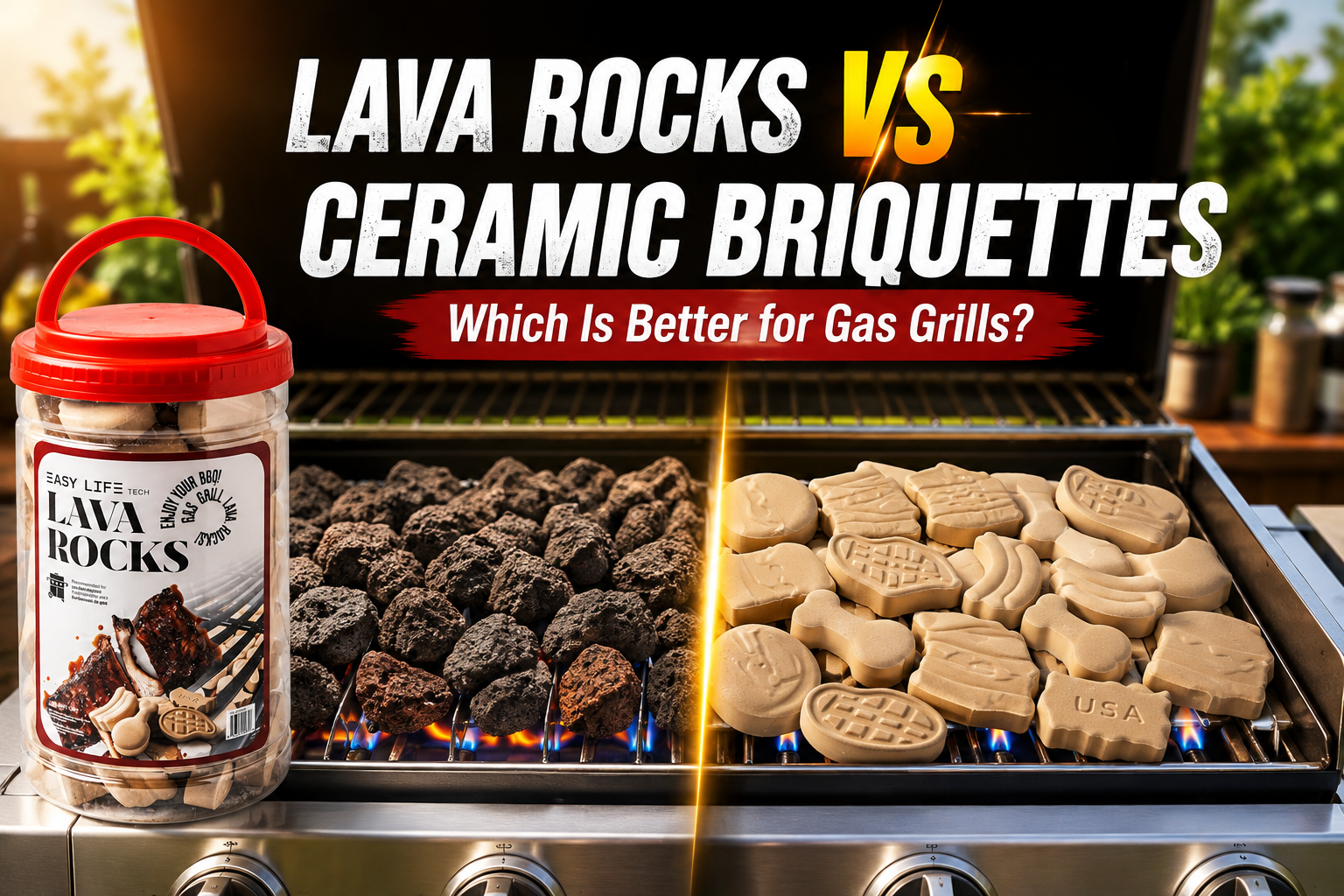
If you have been asking whether lava rocks vs ceramic briquettes make a real difference in how your gas grill performs, the answer is yes and the gap between them is wider than most grillers expect. Both sit above the burners and convert flame into radiant heat, but they do this in fundamentally different ways, and those differences show up in your cook every single time. This guide walks through the key performance factors, from heat consistency and flare-up control to maintenance burden and long-term cost, so you can decide whether a ceramic grill upgrade belongs in your next cookout setup.
Quick Answer
Ceramic briquettes outperform lava rocks across heat distribution, flare-up resistance, longevity, and ease of maintenance. Lava rocks absorb grease into their porous surface, which leads to flare-ups, off-flavors, and frequent replacement. Ceramic briquettes shed grease, radiate heat more evenly, and hold up through multiple seasons with minimal upkeep, making them the stronger choice for regular gas grill use.
How Lava Rocks and Ceramic Briquettes Work in a Gas Grill
Lava Rocks
Lava rocks are chunks of porous volcanic stone placed above the gas burners to absorb and radiate heat. When grease drips down and hits the hot surface, it vaporizes and sends smoke back up toward the food, which is the appeal. Gas grillers relied on lava rocks for years because they were inexpensive, widely available, and did the job well enough for occasional weekend grilling.
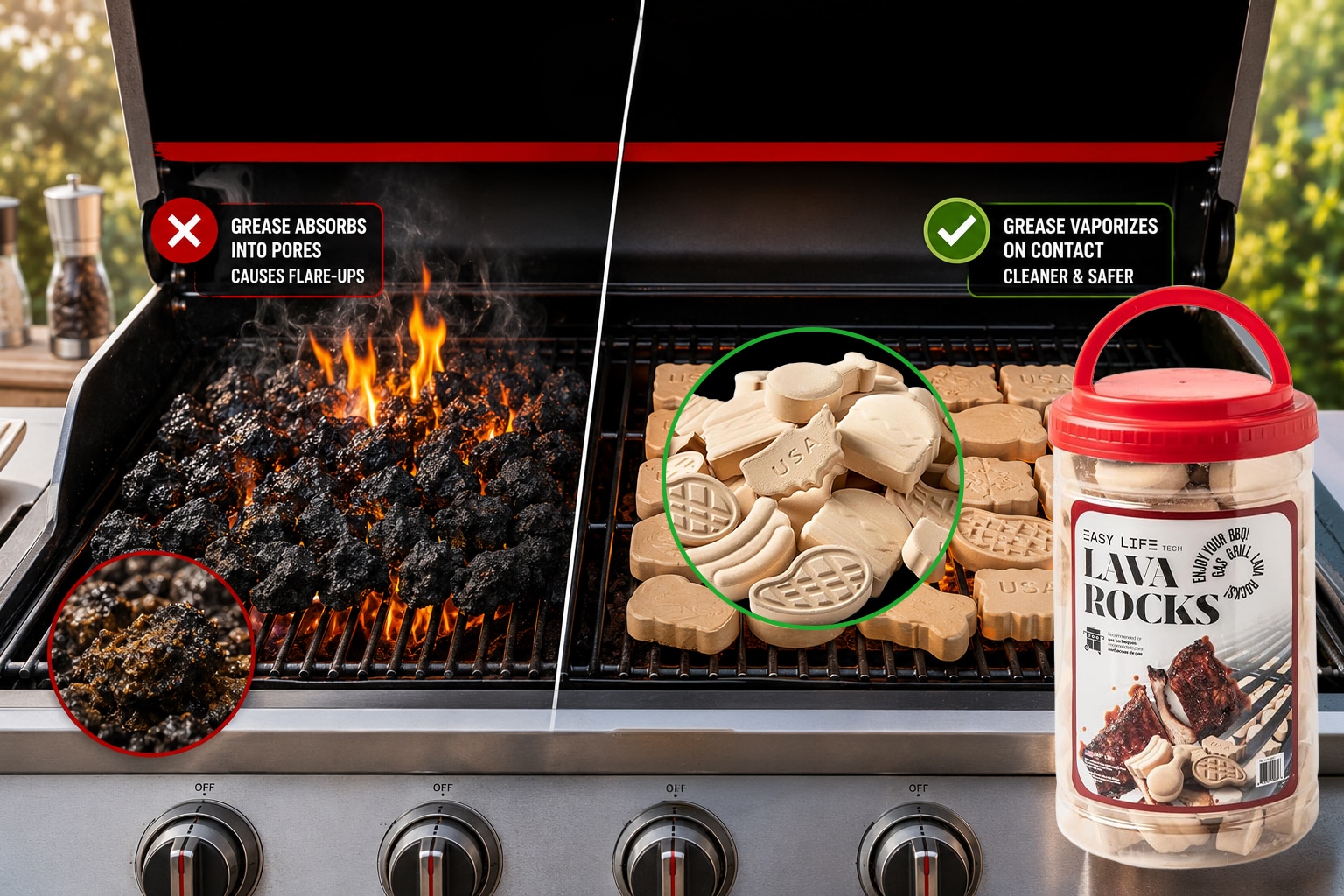
The porous surface that gives lava rocks their heat-absorbing quality is also what makes them problematic over time. Grease penetrates deep into the rock where it cannot be cleaned out, turning rancid after several uses and producing bitter, acrid smoke that affects food flavor. The rocks also crack under repeated thermal cycling and typically need replacing every one to two seasons.
Ceramic Briquettes
Ceramic briquettes are purpose-built grill media, typically shaped as uniform tiles or squares, with a dense, non-porous ceramic surface. Rather than absorbing dripping grease, the surface causes it to vaporize on contact and disperse as clean, even smoke. The uniform geometry also means heat radiates consistently across the entire grilling surface rather than concentrating around irregular shapes.
Because grease does not penetrate the material, ceramic briquettes do not develop the rancid buildup that plagues lava rocks. A quality set can last three to five seasons with basic care, which makes the higher upfront cost easy to justify within the first year of regular use.
Ceramic Briquettes vs Lava Rocks on the Metrics That Matter
Heat Distribution
The irregular shape and varying density of lava rocks create inconsistent heat zones across the grill surface, which means some areas cook faster than others and requires constant repositioning to compensate. Ceramic briquettes, with their standardized size and density, produce a uniform radiant heat field that covers the cooking surface evenly. For anyone grilling multiple items at once, that consistency matters considerably.
Flare-Up Control
Saturated lava rocks are one of the most common causes of uncontrolled flare-ups in gas grilling. As grease builds up inside the pores and the rock reaches high temperatures, that accumulated fat ignites and produces surging flames that scorch food and are difficult to manage mid-cook. Ceramic briquettes shed drippings rather than holding them, which keeps the surface cleaner and does far more to reduce grill flare-ups without changing the cook at all.
Maintenance and Cleaning
There is no practical way to clean lava rocks once grease has saturated them. The only option is disposal and replacement, which adds recurring cost on top of the inconvenience. Ceramic briquettes can be flipped over and run at high heat for 15 to 20 minutes to burn off surface residue, or removed and rinsed with warm water for a more thorough clean. For anyone evaluating the best gas grill accessories on a value basis, that difference in upkeep is significant.
Longevity and Running Cost
Replacing lava rocks every season or two adds up faster than most grillers account for. A set of ceramic briquettes, maintained properly, can run three to five years before performance begins to decline. The per-season cost of ceramic ends up lower than lava rocks within two years, and the labor saved on replacements adds to the value further.
Effect on Flavor
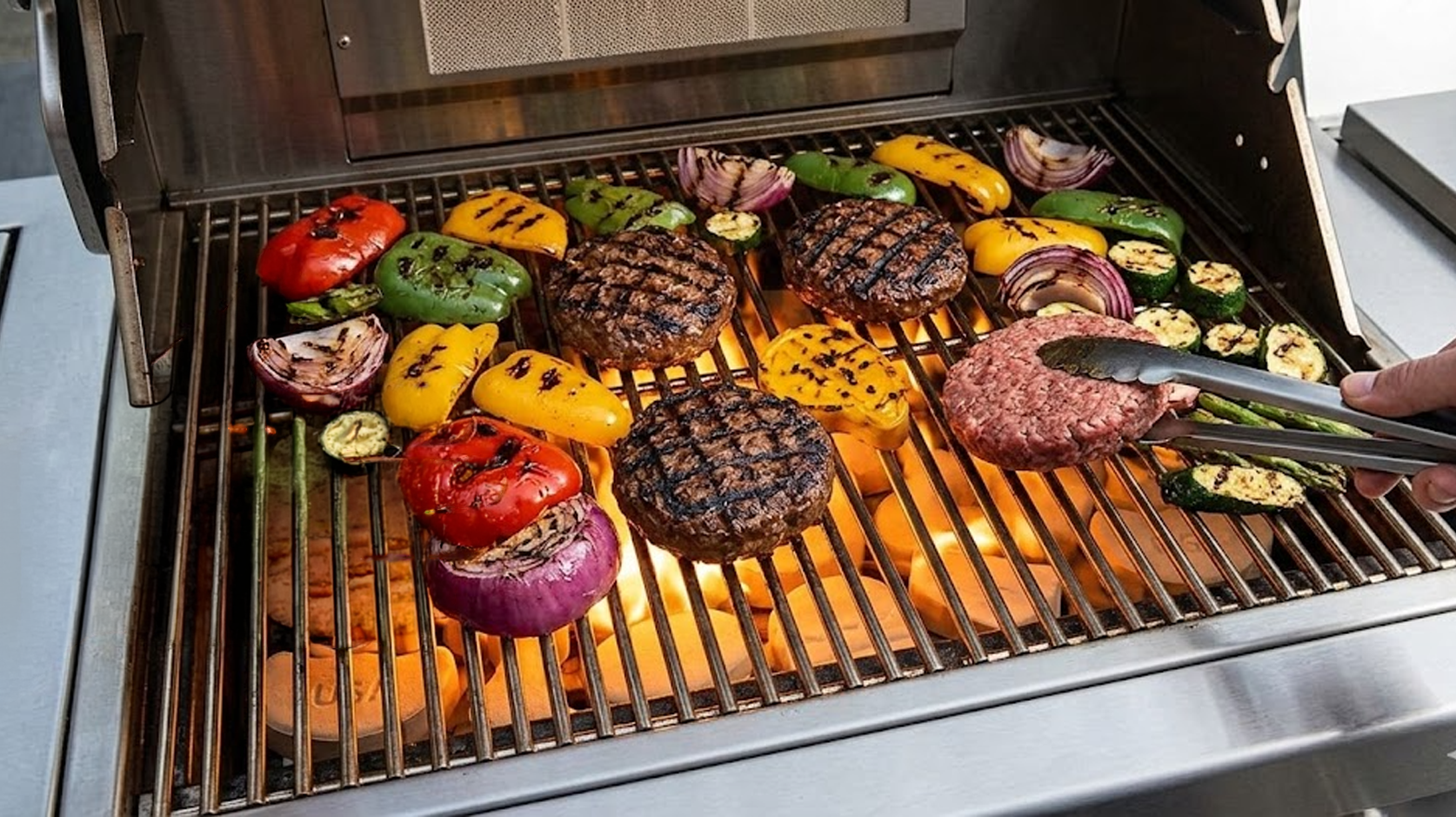
Fresh lava rocks produce decent smoke vapor and do not noticeably harm flavor. Seasoned lava rocks, carrying months of accumulated grease residue, introduce bitter and rancid notes that are subtle at first and unmistakable after extended use. Ceramic briquettes produce cleaner vapor throughout their lifespan because there is no residue reservoir building beneath the surface, so flavor stays consistent cook after cook.
When Lava Rocks Still Make Sense as an Option
For a griller who cooks two or three times a year, replaces media without hesitation when the season turns, and wants to keep the initial outlay low, lava rocks remain a workable lava rocks alternative. The trade-off is ongoing cost and attention. Anyone grilling weekly through a long outdoor season, or cooking for a crowd where consistent heat matters, will find the ceramic switch pays off quickly and removes a recurring maintenance task from the routine.
Why the BBQ King Ceramic Grill Tiles Deliver on This
The BBQ King Ceramic Grill Tiles are built to the specification that ceramic briquettes are supposed to meet: dense enough to withstand prolonged high heat without cracking, sized to cover the burner area of most standard gas grills, and shaped for the even heat distribution that separates quality ceramic from budget alternatives. They require no break-in period, hold up through repeated thermal cycles, and clean easily with a burnoff cycle between uses. For grillers ready to move past the annual lava rock replacement, these tiles are a reliable upgrade that delivers consistent results on every session.
Frequently Asked Questions
How long do ceramic briquettes last compared to lava rocks?
Ceramic briquettes last three to five seasons with routine maintenance, while lava rocks need replacing every one to two seasons due to grease absorption and cracking. The material density of ceramic is what makes the difference, since it does not break down under repeated heat cycles the way porous volcanic rock does.
Do ceramic briquettes actually reduce flare-ups during grilling?
Yes, because lava rocks absorb grease into their pores until the saturated surface ignites under heat, producing flare-ups that are difficult to control mid-cook. Ceramic briquettes shed drippings rather than holding them, so there is no grease accumulation to ignite and no disruption to the cook.
Can ceramic briquettes be cleaned, or do they need to be replaced?
Flipping ceramic briquettes and running the grill on high heat for 15 to 20 minutes burns off surface residue, and a warm water rinse handles deeper cleaning when needed. Lava rocks absorb grease too deeply to be cleaned and need to be discarded once saturated.
Will ceramic briquettes fit my gas grill?
Most ceramic briquettes fit standard gas grills, but dimensions vary across brands and grill models, so checking your grill measurements against the product specs before purchasing is worthwhile. Even coverage across the burner area is what produces the consistent heat distribution ceramic briquettes are built for.
Is switching to ceramic briquettes worth the higher purchase price?
For regular grillers, ceramic briquettes cost less per season than lava rocks within two years, once fewer replacements and lower maintenance are factored in. Consistent cooking performance on top of that makes the upfront price difference easy to justify.