

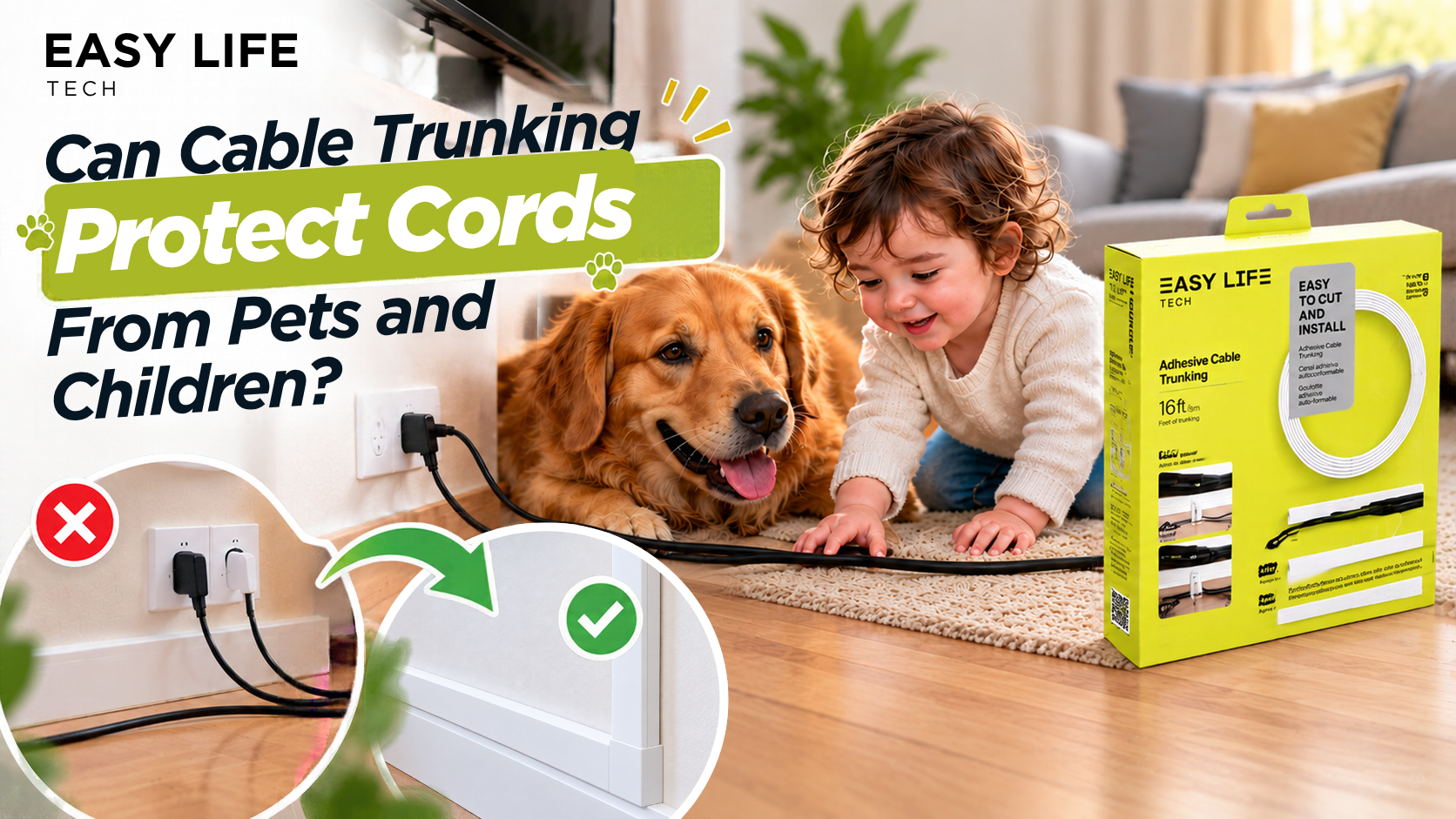
Can cable trunking protect cords from pets and children when curious hands and chewing teeth seem to find every exposed lead in the house? In most homes it can, and cable trunking safety is one of the simplest upgrades for reducing the risks that loose wiring creates. A closed channel keeps cords out of reach, out of sight, and off the floor where they are most likely to be pulled, bitten, or tripped over. Combined with a few sensible habits, it is an effective way to hide electrical cords and give every room a safer, tidier layout.
Quick Answer
Yes, cable trunking can protect cords from pets and children by enclosing them in a closed channel fixed to a wall, baseboard, or furniture. This makes it a practical form of pet proof cable management, since cords can no longer be chewed, tugged, or played with. A flexible roll such as EasyLife Tech Cable Trunking In A Roll can be cut to the exact route, which helps hide electrical cords and keeps wire covers neat and secure. It supports good safety habits but does not replace supervision or regular cable checks.
Why Are Exposed Cords a Risk for Pets and Children?
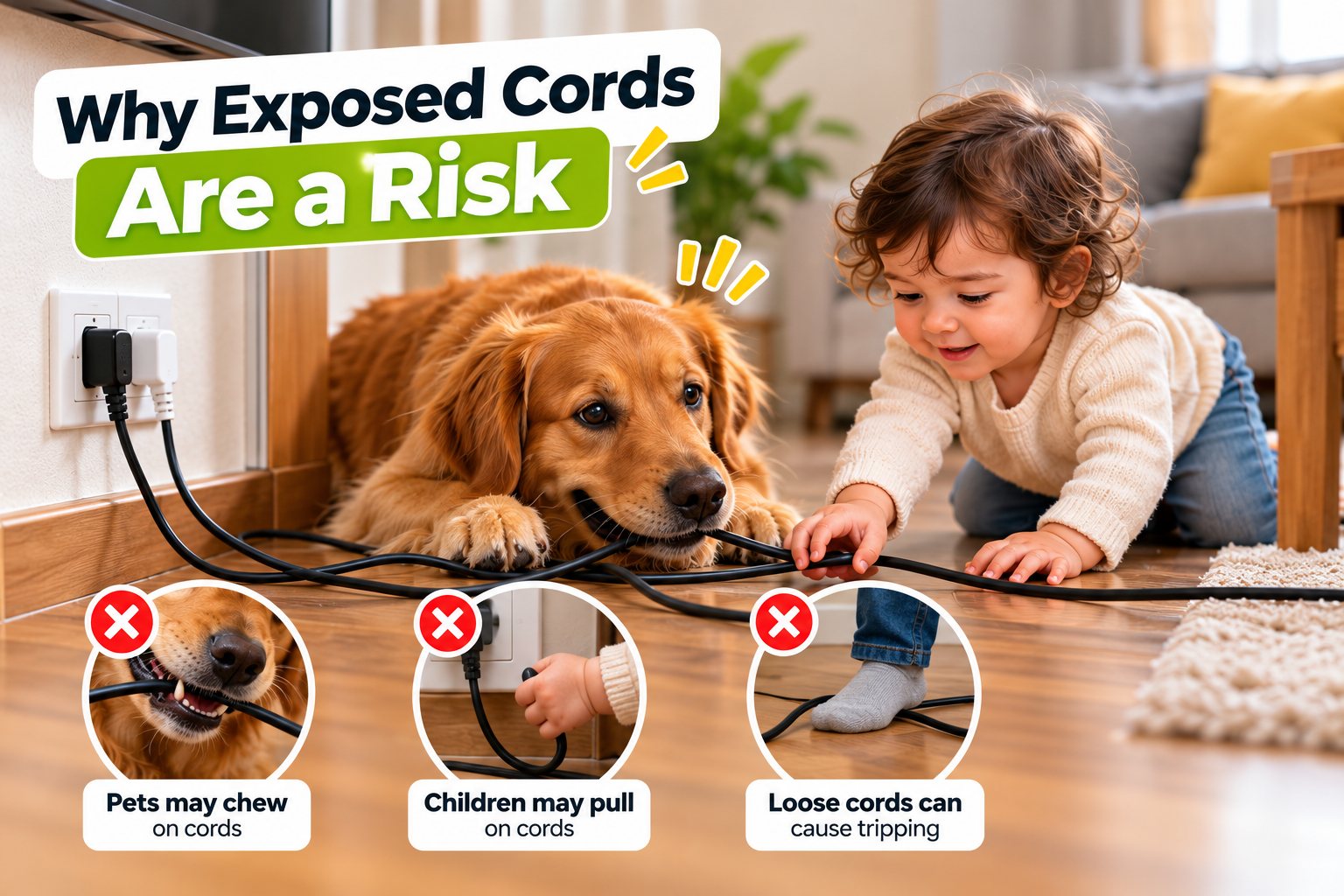
Exposed cords attract attention from the youngest and smallest members of a household. Puppies and kittens chew on wires out of curiosity, and toddlers pull, tug, and mouth anything within reach. Either habit can damage insulation, loosen plugs, or bring a lamp or device crashing down.
Loose wiring also creates tripping hazards for everyone in the home, which is why child safety home tips so often start with the floor. Cords draped across walkways or trailing from a table edge are easy to grab.
How Does Cable Trunking Safety Work in a Family Home?
Cable trunking is a hollow channel with a lid that closes over the cords. Once fixed along a wall or baseboard, it forms a physical barrier between the wiring and curious hands or teeth. The smooth outer surface also gives pets little to grip, which makes chewing far less appealing.
Good cable trunking safety depends on a firm installation. The channel should sit flat against the surface, the lid should close along its full length, and the ends should be tidy so nothing is left exposed. Treated this way, trunking works as sturdy wire covers that blend into a room rather than standing out.
How to Set Up Pet Proof Cable Management
Start With the Highest Risk Cords
Begin with the cords a pet or child is most likely to reach, such as those behind sofas, under desks, and beside play areas. Runs near the floor need the most attention, since that is where chewing and tugging happen.
Fix the Trunking Firmly
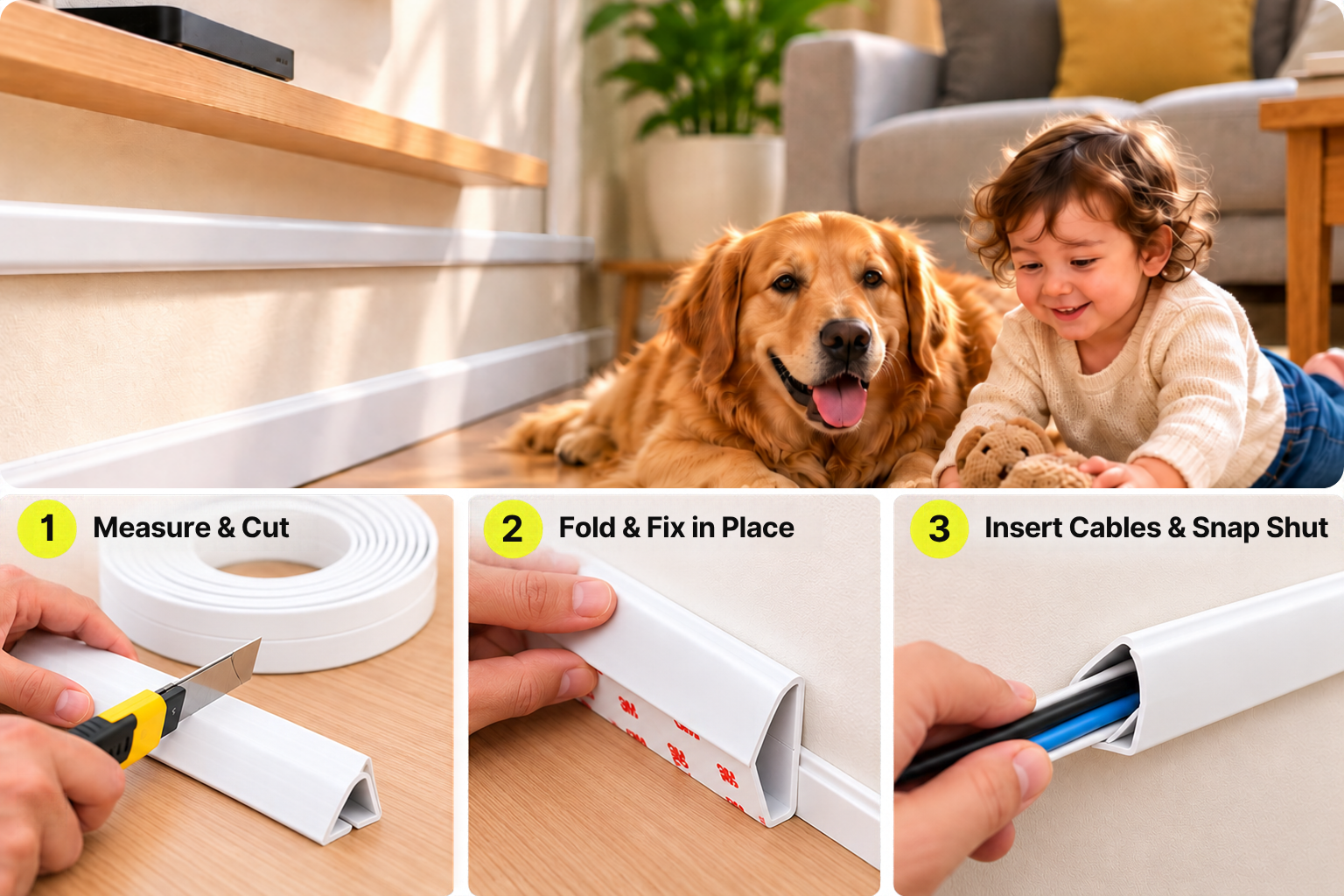
Clean the surface and press the trunking down along the full route, paying attention to corners and ends where small fingers or paws might pick at the edge. A roll can be cut to follow the exact path, which reduces gaps. A secure fit is the foundation of pet proof cable management.
Keep Plugs and Sockets Covered
Trunking protects the cord run, but plugs and sockets still need attention. Use socket covers where children can reach, and keep power strips out of sight on a shelf or behind furniture. This completes the effort to hide electrical cords from the whole household.
[Image placeholder: Step-by-step view of cable trunking being cut and pressed along a wall near a play area]
Why Choose Cable Trunking in a Roll for Home Safety?

A roll lets you cut the trunking to the exact length of each route, so hallways, living rooms, and bedrooms can all be covered with one product. Fewer joins mean fewer edges for pets to nibble at or children to pry open.
EasyLife Tech Cable Trunking In A Roll suits households that want practical wire covers without a complicated installation. It also fits neatly alongside other child safety home tips.
Buying Guide Questions for Cable Trunking Safety
Can pets still chew through cable trunking?
Determined chewers may test any material, so fix the channel firmly and watch how your pet reacts at first. Change the route or add a furniture barrier if a pet keeps picking at the edges.
Is cable trunking enough to child-proof a room?
No, it is one part of a wider approach that includes socket covers, supervision, and keeping devices out of reach. It removes the loose cord problem but not every hazard.
Should I check the cables inside the trunking?
Yes, inspect cords periodically for heat, fraying, or damage, and replace any that look worn. Keep the lid easy to open so these checks stay simple.
What length of trunking should I buy?
Measure each route from the device to the outlet and add a little extra for corners. A roll helps because leftover length can cover a future route.
Is Cable Trunking Safety Worth It for Your Home?
Cable trunking safety comes down to keeping cords enclosed, secure, and out of reach. A closed channel helps hide electrical cords, supports pet proof cable management, and removes the loose wiring that so often draws attention from pets and young children. Paired with socket covers and regular checks, wire covers in a flexible roll make a lasting contribution to child safety home tips in every room.