


Whether ceramic grill tiles for flavor actually change the taste of grilled food is a question that comes up whenever grillers start comparing heat media options, and the answer depends on understanding what flavor compounds form during a cook and what conditions produce them most reliably. Gas grills have always carried a reputation for delivering less depth of flavor than charcoal or wood-fired setups, but that gap has less to do with the fuel source than with how well the heat is managed between the burner and the food. Ceramic tiles change that dynamic in specific, measurable ways, and the flavor difference is a direct result of how radiant heat grilling behaves compared to cooking over open flame.
Quick Answer
Yes, ceramic grill tiles for flavor do make a tangible difference in how gas-grilled food tastes. They produce steady radiant heat that promotes even Maillard browning, vaporize drippings into clean smoke rather than letting them ignite, and eliminate the bitter off-notes that come from old grease sitting on lava rocks or pooling on bare burners. The result is more consistent searing, better surface crust development, and cleaner smoke flavor across every cook.
How Ceramic Grill Tiles for Flavor Change the Cook
The Maillard Reaction and Why Even Heat Matters
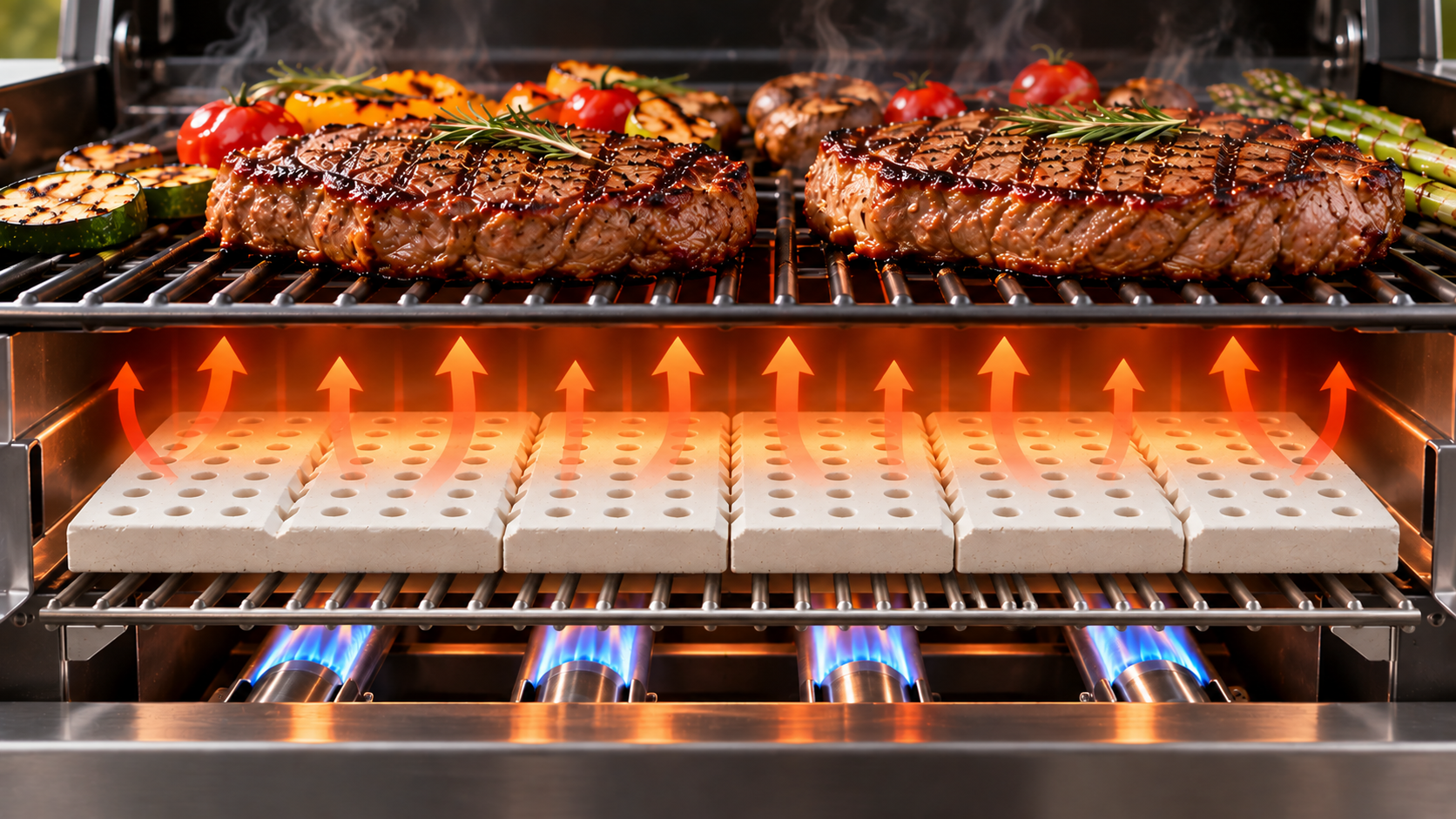
The flavor that defines grilled food comes primarily from the Maillard reaction, the process that occurs when proteins and sugars on the surface of meat reach sustained high heat and begin browning. This reaction requires consistent surface temperature, shutting down where heat is too low and flaring into char where it spikes too high. Open burners and irregular media like lava rocks create both conditions at once, leaving flavor compounds forming unevenly across the surface.
Ceramic grill tiles address this by converting burner flame into stable, even radiant heat across the full cooking surface. Because the tile temperature stays consistent, the food above it experiences uniform heat exposure from the moment it hits the grates, which gives the Maillard reaction the conditions it needs to develop properly across the entire piece rather than just the sections sitting directly above a burner jet.
Smoke Vapor and Clean Drip Vaporization
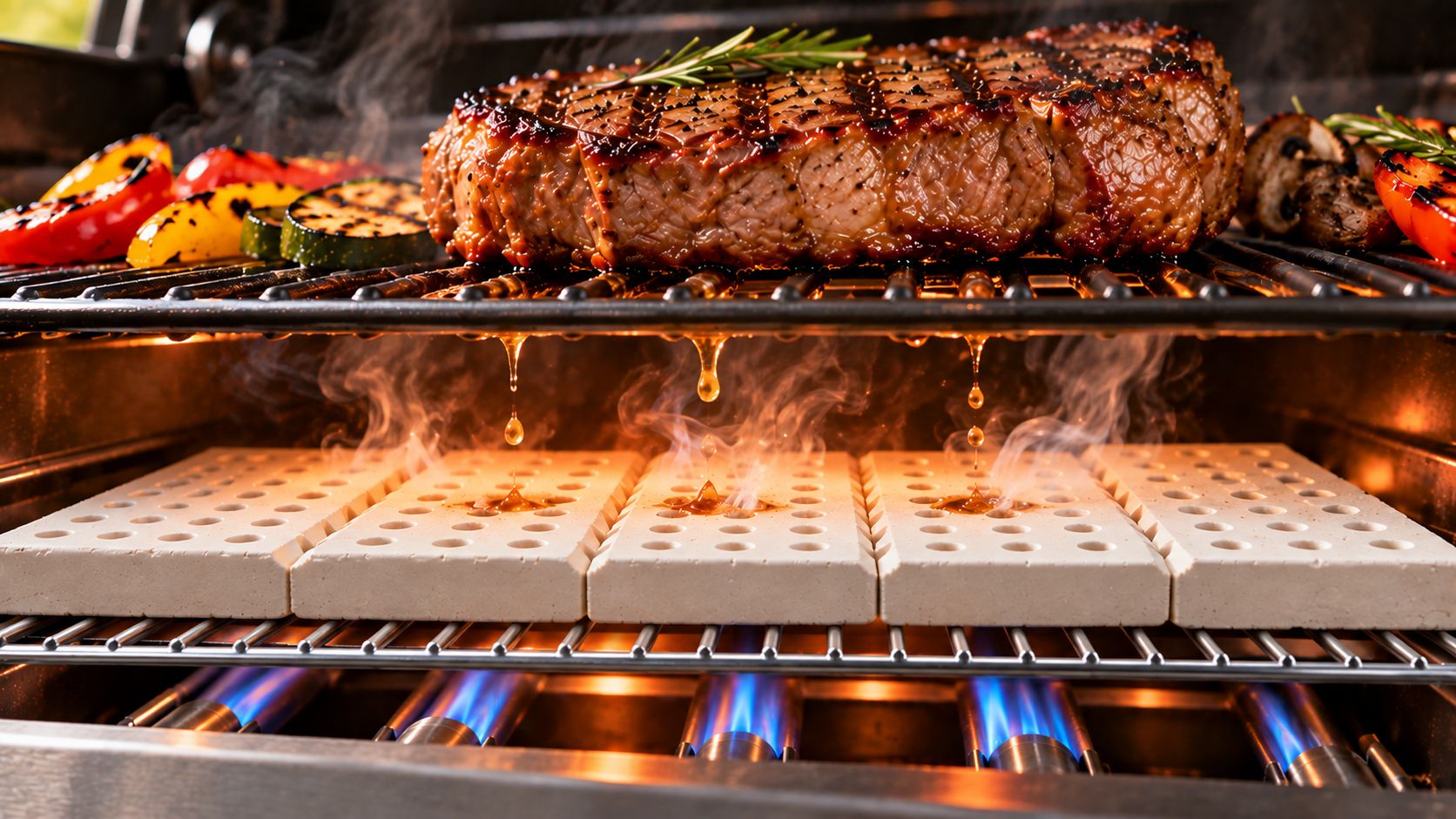
A significant part of grilled flavor comes from smoke produced when fat drips onto the heat source below. On a grill with grease-saturated lava rocks, that drip burns with acrid, bitter smoke that rises back into the food, and on a bare-burner grill it combusts rather than vaporizes. Ceramic tiles vaporize fresh drippings on contact, producing clean vapor smoke that adds depth of flavor without bitterness, which is one of the more reliable grilling tips for improving gas grill results without changing the fuel source.
Eliminating Off-Flavors from Old Grease Buildup
Lava rocks are porous and absorb fat from every cook, building up a reservoir of degrading grease that burns differently each session depending on how long it has been sitting and how much has accumulated. That variable burn produces inconsistent and often unpleasant smoke that affects food flavor in ways most grillers attribute to the grill itself rather than the media. Ceramic tiles do not absorb grease, so there is no accumulation between sessions to introduce off-flavors into the cook. Each session starts from a clean surface state, which keeps the smoke contribution consistent and predictable.
Why Radiant Heat Grilling Produces Better BBQ Flavor
Radiant heat grilling transfers thermal energy from a hot solid surface to the food through infrared radiation rather than open flame or convected hot air. This produces more even surface browning, cleaner drip vaporization, and no sudden temperature spikes that char one section while leaving another underdeveloped. The controlled cooking environment is what delivers better BBQ flavor consistently across the full surface of the food.
For gas grill users, ceramic tiles are the most accessible way to introduce true radiant heat grilling into an existing setup. They require no modification to the grill and no change to cooking technique, and the flavor improvement is noticeable from the first cook onward.
Other Grilling Tips That Work Alongside Ceramic Tiles
Ceramic tiles create the right conditions, but a few additional grilling tips close the gap between a good cook and a great one. Preheating the grill with the tiles in place for 10 to 15 minutes brings the ceramic to full operating temperature before food is added, preventing the cool-surface contact that slows browning on the first side. Patting meat dry before it hits the grates removes surface moisture that would steam the food rather than sear it during the critical first minutes.
Resting meat after it comes off the grill also preserves the flavor compounds developed during cooking. Cutting into the food immediately releases the juices that carry much of the char and smoke flavor, whereas a brief rest allows those juices to redistribute through the meat and deliver more consistent flavor in every bite.
How the BBQ King Ceramic Grill Tiles Deliver on Flavor
The BBQ King Ceramic Grill Tiles are built to the density and surface consistency that makes radiant heat grilling perform as it should. The tile material holds heat evenly across its full surface throughout the cook, vaporizes drippings without absorbing them, and maintains its surface integrity across multiple seasons without the grease buildup that degrades flavor in lava rock setups. For any gas grill user looking to close the flavor gap between their current setup and what a properly managed grill can produce, these tiles are among the most direct gas grill accessories available for achieving that result.
Improve Your BBQ Results
Frequently Asked Questions
Do ceramic grill tiles actually improve the taste of grilled food?
Yes, because they promote even Maillard browning across the full cooking surface and vaporize drippings into clean smoke rather than letting them ignite or pool on rancid media. The flavor improvement is most noticeable in the surface crust quality and the absence of bitter, acrid notes that come from uncontrolled flare-ups or old grease buildup.
How do ceramic tiles produce better BBQ flavor than lava rocks?
Lava rocks absorb grease over time and burn it inconsistently, introducing off-flavors into the smoke that affect the taste of food in ways that worsen with each session. Ceramic tiles do not absorb grease, so drippings vaporize cleanly on contact, producing consistent smoke vapor without the bitterness that builds up in saturated porous rock.
What is radiant heat grilling and why does it affect flavor?
Radiant heat grilling transfers thermal energy from a hot solid surface directly to the food through infrared radiation rather than open flame or hot air, which produces more even surface browning and cleaner drip vaporization. The even heat exposure gives the Maillard reaction the consistent conditions it needs to develop properly, which is where most of the depth in grilled food flavor originates.
Will ceramic grill tiles work on any gas grill?
Most ceramic grill tiles are sized to fit standard gas grill configurations, though checking the tile dimensions against your burner area before purchasing is worthwhile since complete coverage is what enables even heat distribution. Gaps in tile coverage allow direct flame through, which reduces the radiant heat effect and reintroduces the flare-up risk the tiles are designed to eliminate.
How long before ceramic tiles affect flavor noticeably?
The flavor difference is typically noticeable from the first cook, since the tiles immediately change the heat environment from open flame to radiant surface heat and begin vaporizing drippings cleanly from session one. The improvement becomes more consistent over the first few cooks as the tiles reach their full operating temperature cycle and the grill no longer carries residue from the previous heat media.