

Are ceramic grill tiles worth it for radiant heat grilling, or is the heat-distribution promise just another packaging claim that falls apart at the grill grate? That question is fair, especially for anyone who has already tried flavorizer bars, lava rocks, or standard briquettes and walked away with the same scorched edges and undercooked centers they were trying to fix. Grill owners doing their homework before buying tend to want more than a features list. They want to know whether ceramic grill tiles actually change what happens to the food, or whether they are simply a modern repackaging of older heat management tools. The mechanics are straightforward once you break them down, and the science behind radiant heat grilling is more practical than it might sound on a product page.
Quick Answer: Are Ceramic Grill Tiles Worth It
Yes. Ceramic grill tiles absorb heat from the burner flame and re-radiate it evenly across the cooking surface, rather than letting direct flame contact the food unpredictably. This radiant heat layer reduces flare-ups, cuts hot and cold zones, and can lower gas consumption because the tiles retain heat efficiently at lower burner settings. For grillers dealing with uneven cooks or frequent flare-ups, the upgrade delivers real, measurable results.
How Radiant Heat Grilling Works
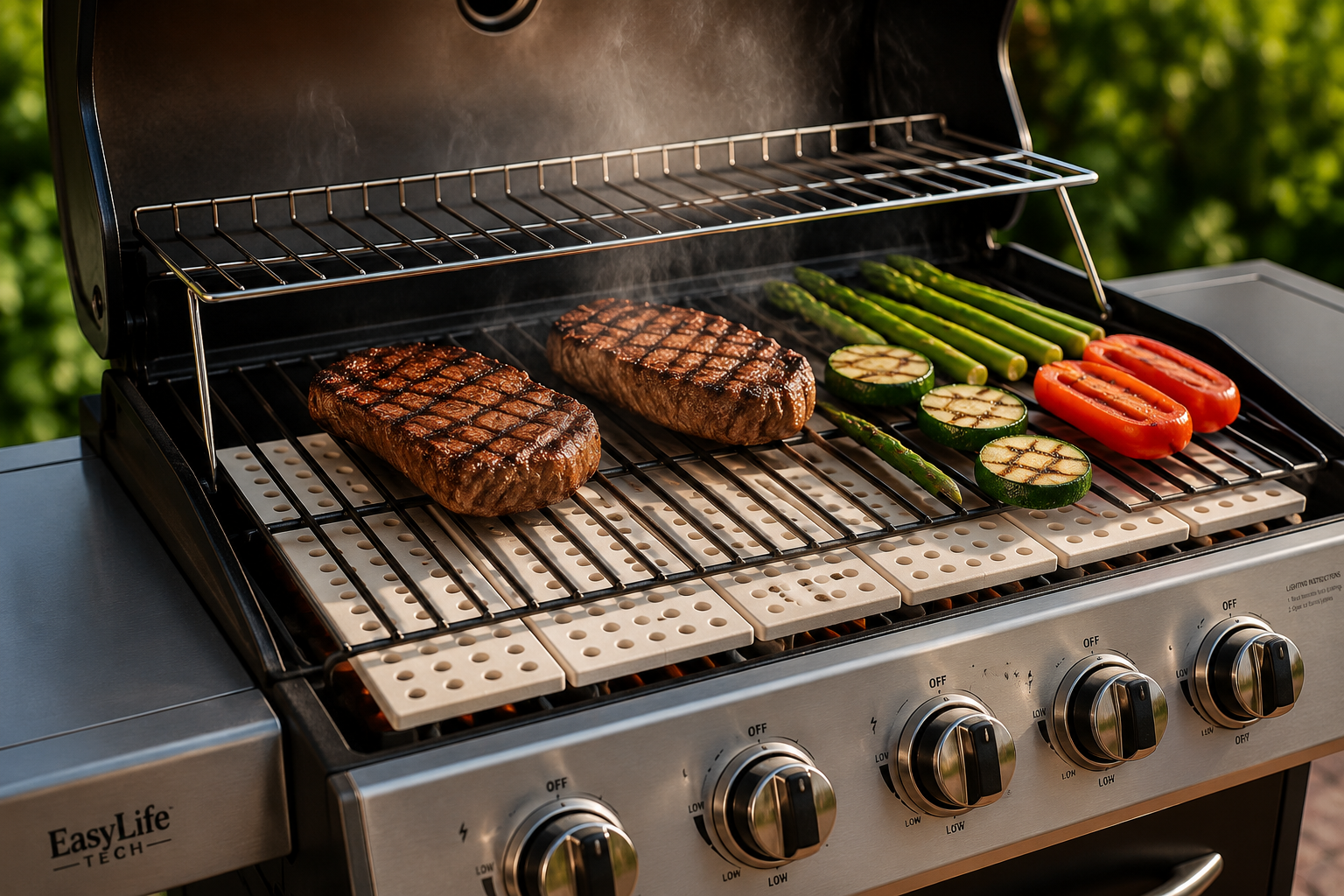
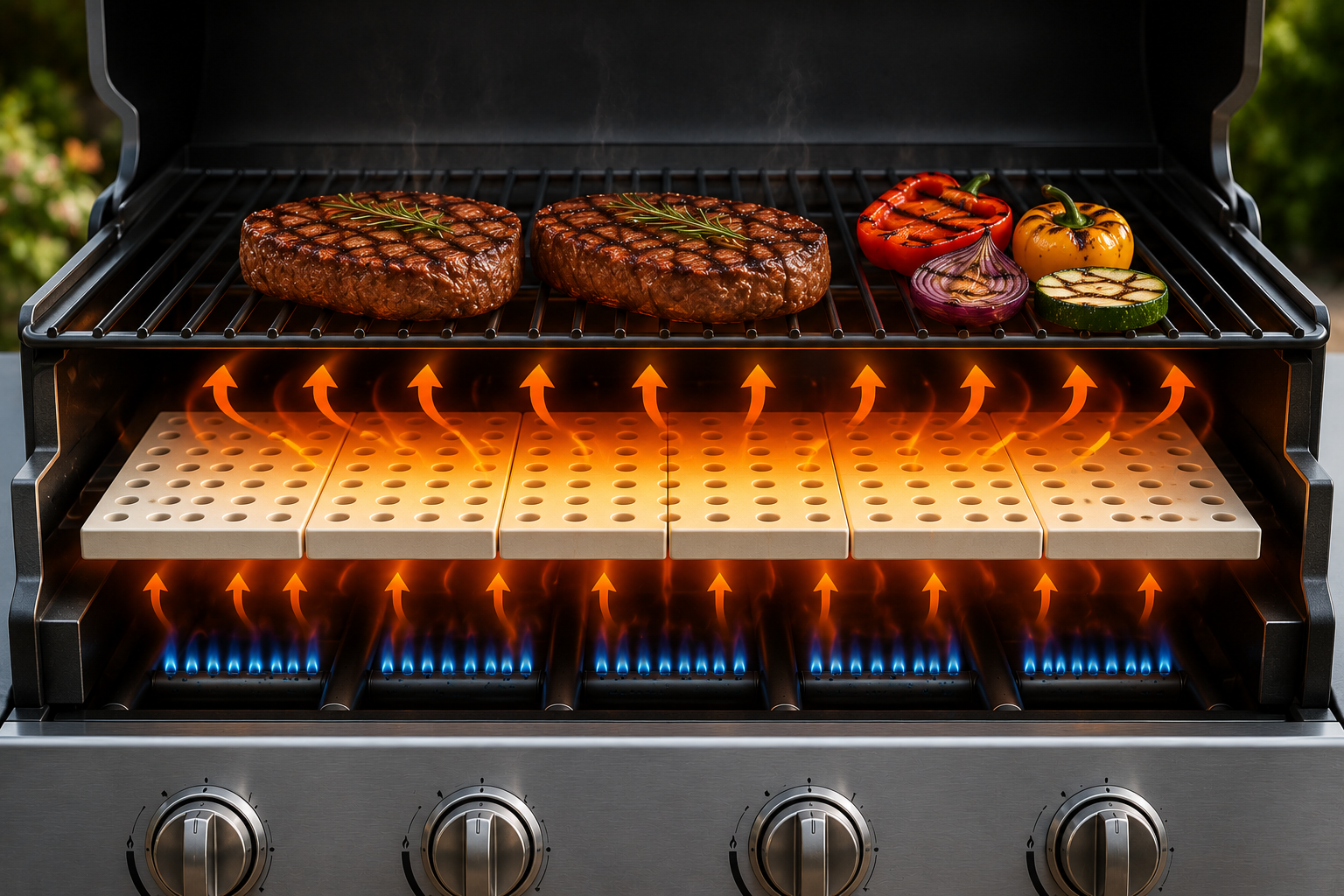
Direct flame cooking sends bursts of heat upward with very little control over where that energy lands on the grate. Radiant heat grilling changes the equation by placing a layer of material between the burner and the food that absorbs the thermal energy first, then releases it steadily and evenly.
EasyLife Tech ceramic grill tiles are made from cordierite ceramic, a material chosen for its ability to take on high heat without cracking while distributing that heat uniformly. The same principle applies to pizza stones and kiln bricks, both of which are engineered to store thermal energy and release it at a consistent rate rather than in unpredictable spikes. The result is a cooking environment that stays steady even when the burner output shifts slightly during a long session.
How Ceramic Tiles Absorb and Hold Heat
Ceramic has a high thermal mass, which means it can take in a significant amount of heat before its own surface temperature rises noticeably. Once fully heated, it gives that energy back slowly and consistently across the entire surface, which is what produces the even sear that radiant heat grilling is known for. This behavior holds even when burner output fluctuates slightly, because the tile itself acts as a buffer against those changes.
That buffering effect is also what separates ceramic grill tiles from lava rocks and standard briquettes. Lava rocks degrade over time, absorb grease unevenly, and become harder to clean the longer they are in use. Ceramic grill tiles hold their structure through repeated heat cycles and clean up with a simple flip and burn, with no scrubbing required.
Flare-Up Control Explained
Flare-ups happen when dripping grease reaches an open flame directly. Ceramic grill tiles intercept that path, catching the drippings and burning them off gradually rather than igniting them instantly. This is one of the core reasons grillers see fewer flare-ups after switching, and it also explains why food tends to come off with less bitter, charred flavor from unexpected flame contact.
The grease management difference is especially noticeable during longer cooks or when working with fattier cuts. Instead of a sudden flare that forces you to move food around the grate, the ceramic tile layer handles it without any intervention needed.
Ceramic Grill Tiles Performance Breakdown
A fair evaluation should cover the categories that matter most to everyday grilling rather than controlled lab conditions.
● Heat distribution: Excellent, with minimal hot and cold zones across the cooking surface.
● Flare-up control: Strong, since grease burns off gradually rather than igniting on contact with open flame.
● Gas efficiency: Improved, as tiles hold heat well enough to cook effectively at lower burner settings.
● Durability: Long-lasting cordierite ceramic that resists cracking through repeated heat cycles.
● Maintenance: Simple. Tiles clean up by flipping and burning off residue, with no scrubbing required.
Is a Ceramic Grill Tile Setup Right for Your Grill
A few practical questions help narrow down whether the upgrade makes sense before buying.
What is your biggest grilling frustration?
If flare-ups or uneven cooking are the main complaints, radiant heat grilling directly targets both. Grillers who already have good heat control on their current setup may see a smaller difference than those dealing with consistent hot spots or repeated flaring.
What size is your grill?
EasyLife Tech ceramic grill tiles measure 6 by 3 inches and snap apart by hand, so a set of 15 can be configured to fit most gas grill burner layouts without cutting or guesswork.
How much upkeep are you willing to do?
Ceramic tiles need only an occasional flip-and-burn cycle to stay clean. Compared to scrubbing grease-soaked lava rocks or replacing degraded briquettes, the maintenance load is noticeably lower
Why Choose EasyLife Tech Ceramic Grill Tiles
EasyLife Tech ceramic grill tiles are built from durable cordierite ceramic designed to deliver consistent radiant heat grilling without cracking or breaking down over time. The snap-apart design means you are not working around a fixed tile size that may or may not match your burner layout.
● Snap-apart sizing that adapts to nearly any gas grill
● Even heat distribution that reduces flare-ups and hot spots
● Lower gas consumption from efficient heat retention
● Simple flip-and-burn cleaning with no scrubbing required
● A dependable upgrade from lava rocks and standard briquettes
The Verdict on Ceramic Grill Tiles and Radiant Heat
Are ceramic grill tiles worth it for radiant heat grilling? The science of how ceramic handles thermal energy supports a clear yes, and the real-world results back that up with steadier cooking temperatures, fewer flare-ups, and noticeably less gas used per session.
For grillers who have been living with uneven cooks and surprise flare-ups, switching to a ceramic tile setup is one of the more practical upgrades available. It addresses the actual cause of those problems rather than adding another tool on top of them.
Ready to upgrade your setup? Shop Now and see what EasyLife Tech ceramic grill tiles bring to your next cookout.
FAQs
Are ceramic grill tiles worth it?
Yes, ceramic grill tiles can provide more consistent heat distribution, fewer flare-ups, and better heat retention than some traditional grill media. They are particularly useful for grillers dealing with hot spots, uneven cooking, or frequent flare-ups.
Do ceramic grill tiles improve radiant heat grilling?
Yes, ceramic grill tiles absorb heat from the burners and radiate it steadily across the cooking surface. This creates a more consistent cooking environment and reduces the intensity of direct flame reaching the food.
Are ceramic grill tiles better than lava rocks?
Ceramic grill tiles offer more consistent heat retention and are generally easier to maintain than lava rocks. They also resist repeated heat cycles well and can be cleaned through a simple flip-and-burn process.
Do ceramic grill tiles reduce flare-ups?
Yes, ceramic grill tiles create a barrier between dripping grease and the burner flame, allowing grease to burn off more gradually. This can reduce sudden flare-ups and help prevent unexpected charring during cooking.
How do you clean ceramic grill tiles?
Ceramic grill tiles can typically be cleaned by flipping them over and running the grill at a high temperature to burn off accumulated grease and residue. This makes routine maintenance easier without requiring scrubbing or harsh cleaners.